
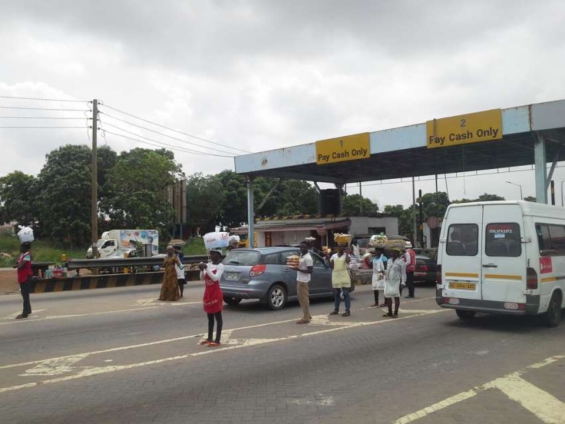
Preamble
MyJoyOnline reports that during the keynote address at the 9th edition of the Ghana CEO Summit, H.E. President John Dramani Mahama cited Ghana’s current technological advancements, which have seen the country’s national identity card (Ghana Card) linked to several services, including driver’s licenses and vehicle registration. He noted that “The good thing today is that every car is linked to the owner’s Ghana card.”
The President further stated that for the new road toll system to be implemented: “If it’s 1 cedi, if you cross the East Legon bridge, a picture of your car is taken, and a bill will be sent to you and deductions made through your mobile money or your bank account.”
For any tech-savvy person, this visionary statement by H.E. the President immediately provokes excitement, thoughts and visions of the entire Information Technology (IT) ecosystems, architecture, high-speed high-resolution cameras, AFIS, ABIS, other Biometric systems, integration, interoperability, siloed databases, unitary or distributed, unified “Block chained” records, security, cybersecurity, and more.
How It Works
Technical Process Flow
So, how would such a road electronic tolling (e-tolling) system operate? Technologically, H.E. President’s statement can be translated into a technical process flow, which at its simplest is as follows:
- Image Capture: As the vehicle crosses the bridge or at the point of tolling, a sensor detects the presence of a vehicle and triggers a high-speed, high-resolution camera to take an image or video of the vehicle’s license plate, without the vehicle needing to stop.
- Plate Detection: A software isolates the Vehicle License Number (VLN) plate area from the image.
- Character Recognition: An optical image reader (OCR) software reads the letters and numbers from the image and converts them to text format.
- Data Processing: The Vehicle License Number (VLN) is queried against the DVLA database to derive a biometrically verified Vehicle Owner’s ID (VOID), plus Owner Phone/SIM Number, and the associated MoMo/Bank Account Number.
- Toll Charge: The appropriate toll charge is now made against the MoMo Account, and an SMS confirmation message is sent to the Vehicle Owner’s Phone.
All within a couple of seconds! No queues, no stopping, no cash. Smooth, efficient, and beautiful! THE GHANA RESET WE ALL NEED!
The entire technology is known as Automatic Number Plate Recognition (ANPR) or ALPR (Automatic License Plate Recognition) that uses optical character recognition (OCR) to automatically read vehicle license plates from images or video footage.
Extended Applications
These high-resolution cameras can also be installed on:
- Traffic light poles
- Road junctions
- Mobile police vehicles
- Even on foot patrol officers
They are strategically positioned to detect illegal off-road driving and misdemeanors in cities and on motorways, with vehicle owners receiving instant fines and penalties directly debited from their MoMo/Bank accounts. Fast, instant, and efficient enforcement without human intervention.
When combined with speed measurement devices (speed gun) as a trigger, these high-resolution cameras will catch over-the-limit speed offenses, with automatic fines and levies deducted instantly without argument.
“Kwasia bii intii” Traffic Offenses Program
With an e-Tolling system like this implemented and functional, several extended applications become possible. One such approach, to use the phrase of Hon. Asiedu Nketia (pardon me!) in this context, is to implement a “Kwasia bii intii” (“a Nitwit because”) TRAFFIC OFFENSES PROGRAM for an effective penal traffic control and management system. The program will impose instant fines and penalties for:
- Vehicle misdemeanors
- Wrong parking
- Red traffic light infringements
- Other traffic violations
DVLA could be a wealthy agency indeed! Calmer roads for Ghana, I would imagine.
Electronic Vehicle Tolling: Global Practices
Globally, Electronic Vehicle Tolling (e-Toll) is a mature technology with wide adoption by most advanced countries, with China presenting the most formidable case study, which warrants a dedicated article.
Core Technology Approaches
- Dedicated Short-Range Communication (DSRC) Systems
- Based on Radio Frequency ID (RFID) tags
- Examples: E-ZPass (Northeastern and Midwestern United States), FasTrak (California), FASTag (India)
- When a vehicle crosses e-toll points or gantries, electronic readers communicate with RFID tags in vehicles
- Automatic Number Plate Recognition (ANPR)
- As described by H.E. the President
- Uses high-speed, high-resolution cameras
- Example: UK’s Dartford Crossing and London Congestion Charge backup e-toll system
- Global Navigation Satellite System (GNSS)
- Based on GPS, GLONASS, or Galileo
- Uses vehicle-mounted onboard units (OBUs) to track vehicle movement
- A system beyond Ghana’s current needs
Global Case Studies
Singapore – ERP (Electronic Road Pricing)
The GNSS-based ERP 2.0 used in Singapore is the next-generation advanced Electronic Road Pricing system that uses satellite-based Global Navigation Satellite System technology to manage urban traffic and congestion.
Key Features:
- Distance-based congestion charging system
- Utilizes satellite positioning technology through vehicle-mounted onboard units (OBUs)
- OBU has touchscreen and 4G connectivity
- Charging depends on distance traveled and location
- Real-time updates with rates and alerts shown on touchscreen
- Coverage spans entire island
Objectives:
- Reduce road congestion more effectively by charging proportionally to road usage
- Enable fairer pricing (those who drive more in congested areas pay more)
Timeline: Piloted 2020–2022, began phased rollout from late 2023 into 2025
India – FASTag System
DSRC (FASTag) used in India is RFID-based with the following characteristics:
- Based on RFID stickers on all vehicles
- Mandated nationally since 2021
- Payments auto-debited from linked mobile or bank accounts, including UPI wallets
- Adoption scaled nationally by linking FASTag with vehicle registration at point of sale
Benefits:
- Dramatically reduced queues and congestion at toll plazas (journey times cut by up to 80%)
- Lowered operational costs significantly
- Almost eliminated cash handling and manpower needs
- Increased transparency and reduced revenue leakage through electronic audit trails
Challenges: Initial implementation hurdles such as tag availability, reader reliability, and account management (largely overcome)
Secondary Benefits of Electronic Road Tolling
Vehicle Flow Analytics (VFA)
While e-toll is primarily focused on more efficient revenue mobilization, when implemented properly, an e-tolling system creates a valuable stream of real-time data that can be leveraged for:
- Transport planning
- Law enforcement
- Taxation
- Economic forecasting
- National security
Key Metrics Analyzed:
- Vehicle counts (per minute/hour/day)
- Speed and travel time
- Vehicle classification (car, truck, bus, etc.)
- Origin-destination flows
- Congestion levels
- Toll point performance and revenue per segment
- Owner characteristics (gender, age, frequency of road use)
Analytical Techniques:
- Pattern recognition (peak hours, route preferences)
- Predictive modeling (forecasting congestion)
- Emission mapping
- Incident detection
- Demand modeling for transport planning
- Predictive e-toll income for national budget planning
Applications: Data-Driven Traffic and Infrastructure Planning
In the Ghanaian Context
Urban Planning: Vehicle Flow Analytics will help identify:
- Congestion points on roads
- Peak travel times
- Road infrastructure stress points
- Where to expand roads or build new bypasses
- Evidence-based road infrastructure investment decisions
The Accra Central Business Zone (ACBZ) could be zoned as a high e-toll tariff zone, charged at double the normal rate to discourage unnecessary trips. Dynamic e-toll charges could be applied during peak hours only to manage congestion.
Vehicle Registration and Insurance Compliance: VFA matches toll records against the national vehicle registry at DVLA to:
- Flag unregistered or expired vehicle licenses
- Check roadworthiness certificates and insurance
- Enable direct billing through mobile money accounts
- Spread payments monthly instead of yearly bulk sums
- Send automated alerts via SMS for defaulters
- Enable roadside scanners to identify defaulters for police enforcement
Environmental Monitoring and Emissions Control: E-tolling VFA data can:
- Track vehicle types, engine classes, and emission zones
- Enable introduction of low-emission zones
- Implement congestion taxes
- Offer green or electric vehicle discounts
- Help quantify carbon footprint of vehicular movement
Enhanced National Security and Crime Prevention: Integration with existing CCTV networks enables:
- Detection of stolen vehicles
- Tracking movements of suspect vehicles
- Support for border security
- Real-time data sharing with security services
- Monitoring cross-border movements
Support for Local Government Revenue: E-tolling points can be geofenced to channel revenues directly to district or municipal assembly treasuries.
The Weakest Link: Ghana’s Citizenship Identity Architecture
The weakest link in implementing e-toll might be Ghana’s peculiar Citizenship Identity architecture. The Ghana Card is not enough of an identifier on its own, but a single component of the full identification system that the country needs to migrate into a digital ecosystem.
Requirements for Comprehensive Digital Citizen Identification
A comprehensive Digital Citizen Identification system should accomplish three things:
- Biometric Identification: Unambiguously identify a citizen biometrically (Ghana Card achieves this)
- Communication: Government agencies should be able to communicate with the citizen (Mobile Phone ID facilitates this)
- Financial Transactions: Government must be able to conduct financial transactions with the citizen (Mobile Money platform enables this)
The Problem: Incomplete Integration
Current State – Siloed Databases:
- Ghana Card is required for DVLA licenses and captured at DVLA’s database
- Ghana Card is required for phone/SIM and MoMo account registration, captured at each mobile operator’s database
- Ghana Card is required for bank accounts, captured at each bank’s database
Current E-Toll Process (Cumbersome):
- First query to DVLA database returns Ghana Card ID of vehicle owner
- Second query using Ghana Card ID to mobile operators returns phone/SIM number and associated MoMo account
- Third query retrieves bank account details if bank payment is preferred
This process is cumbersome, inefficient, creates multiple points of failure, and increases the risk of incomplete e-toll levy transactions.
Proposal: Unique Citizen Identification (UCI)
Recommended Solution
The core Ghana Card ID database at the NIA should include:
- Bio-identification (Ghana Card)
- Mandatorily preferred single registered Phone/SIM Number
- Mobile Money ID enabled for transactions
This creates a Unique Citizen Identification (UCI) that goes beyond just the Ghana Card ID.
Implementation Framework
Step 1: Enhanced NIA Database The Ghana Card database should contain:
- Ghana Card + Phone/SIM + MoMo/Bank Account = TRUE UNIQUE CITIZEN IDENTIFICATION (UCI)
Step 2: Database Integration This combined UCI should be mandatorily transferred to other databases:
- DVLA
- SSNIT
- GRA
- Births and Deaths Registry
- Other government agencies
Step 3: Streamlined E-Toll Process After ANPR derives the vehicle number plate, a single database query to DVLA yields all required data to complete the MoMo charge to the vehicle owner.
Benefits of UCI Implementation
- Single point of query for all citizen services
- Reduced system complexity and failure points
- Enhanced data integrity and security
- Streamlined government service delivery
- Foundation for comprehensive digital transformation
Conclusion
Electronic tolling is more than just a mechanism for collecting revenue; it serves as a cornerstone of a national digital intelligence infrastructure.
When the Unique Citizen Identification (UCI) is integrated with a comprehensive digital governance framework, ported to agencies like SSNIT, GRA, Property Rates, Legal, Passports, Births and Deaths registry, and other government citizen interactions, it forms the catalyst for widespread digital transformation across sectors including:
- Transportation
- Education
- Health
- Security
- Taxation
- Property rates
- Urban planning
Ultimately, this integration establishes a robust foundation for delivering government services centered around the needs of citizens—a CITIZEN-CENTRIC DIGITAL ECOSYSTEM.
My two pesewas!
Leslie Mensah Tamakloe