
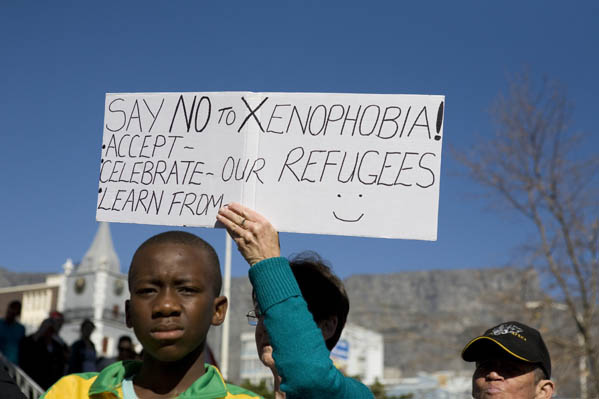
Ghana welcomes the arrival of its gallant citizen back to the homeland, having endured and escaped the xenophobic attacks at the hands of fellow black South Africans. Congratulations to the President, John Dramani Mahama, and the most effective foreign minister in recent times, Hon. Samuel Okudjeto Ablakwa.
The recurring xenophobic attacks against African nationals living in South Africa are painful, disturbing, and deeply disappointing. For many Africans, these attacks feel like a betrayal of a shared history. Across the continent, nations sacrificed blood, treasure, diplomatic capital, and political goodwill to support South Africa’s liberation struggle against apartheid. From Ghana, Nigeria, Zambia, Tanzania, and many others, came support that helped sustain the fight for freedom until apartheid finally fell.
Today, many Africans watch with sadness as fellow Africans are targeted simply because they come from another African country.
The understandable reaction is anger, and justifiably so!
Calls are growing in Ghana and some countries for retaliatory measures: demonstrations against South African businesses, expulsions of South African nationals, seizure or nationalisation of South African investments, and economic punishment. Such emotions are understandable. However, while retaliation may satisfy anger in the short term, it risks dragging both sides into a downward spiral that benefits nobody.
Africa must choose a better path.
The challenge before us is not merely how to punish xenophobia, but how to eliminate it.
Retaliation Creates New Victims
South African companies operating across Africa employ tens of thousands of Ghanaian and African workers. Telecommunications firms, banks, retailers, mining companies, and service providers contribute to local economies and provide livelihoods to ordinary citizens.
Attacking these businesses would not primarily hurt the perpetrators of xenophobic violence. Instead, it would harm workers, consumers, pension funds, suppliers, and families who depend on these enterprises.
Similarly, targeting innocent South African citizens living in other African countries would simply reproduce the very injustice we condemn.
If xenophobia is wrong when directed against Ghanaians, Nigerians, Zimbabweans, Malawians, Ethiopians, Congolese, or Mozambicans in South Africa, then it is equally wrong when directed against South Africans elsewhere.
Africa cannot defeat intolerance by becoming intolerant.
Understanding the Roots of Xenophobia
While criminality and hatred must never be excused, understanding the causes of xenophobia is essential if it is to be defeated.
Many South African communities face severe unemployment, inequality, housing shortages, crime, and economic frustration. Unscrupulous political actors and criminal groups often exploit these frustrations by blaming foreigners for challenges that have far deeper structural causes.
Foreign nationals become convenient scapegoats.
The problem, therefore, is not merely one of law enforcement. It is also a problem of education, social integration, economic opportunity, and political leadership.
Lasting solutions require addressing all of these dimensions.
A New African Strategy for De-escalation
Instead of escalating tensions, African governments should launch a continent-wide initiative focused on reconciliation and education.
1. Cultural Exchange Programmes
African governments should dramatically expand student, youth, artistic, sporting, and professional exchanges between South Africa and other African nations. Ghana should lead — funded by South African companies operating here — in this effort, perhaps bringing the leaders of these xenophobic groups to visit during H.M. Otumfuo’s Akwasidi, Togbe Sri III’s Hogbetsotso, the Ga Mantse King Tackie Teiko Tsuru II’s Homowo, and similar cultural events.
Young people who learn together, work together, and live together are far less likely to view each other as enemies — a critical lesson of Kwame Nkrumah’s boarding schools programme.
Every year, thousands of young South Africans should visit Ghana, Nigeria, Kenya, Zambia, Tanzania, Senegal, and other countries, while young people from those nations should spend time in South Africa.
Personal relationships are among the strongest antidotes to prejudice.
2. Pan-African Education Curriculum
Many young Africans know very little about the liberation struggles that united the continent. Schools across Africa — particularly in South Africa — should teach a common module on the anti-apartheid struggle, the contributions of African countries to South Africa’s liberation, the role of leaders such as Kwame Nkrumah, Julius Nyerere, Kenneth Kaunda, and Nelson Mandela, the economic and cultural interdependence of African nations, and the ideals of Pan-Africanism.
This should be a critical intervention designed, championed, and funded by the African Union. Many young people participating in xenophobic violence simply do not understand this shared history. Education can help restore that memory.
3. Invite Community Leaders to Ghana and Other African States
One innovative approach would be to invite community leaders, youth leaders, labour organisations, religious leaders, and even individuals associated with anti-foreigner movements to visit other African countries.
Such visits would expose them to the people they often hear about only through stereotypes. Meeting Ghanaian traders, Nigerian entrepreneurs, Zimbabwean teachers, or Malawian workers in their home environments could humanise relationships and challenge misinformation.
Dialogue often succeeds where condemnation alone fails.
4. Establish an African Reconciliation Forum
The African Union should establish a permanent forum dedicated to preventing xenophobia and strengthening African solidarity. This body could monitor xenophobic incidents, promote dialogue, support community mediation, develop educational materials, and facilitate rapid responses before tensions escalate into violence.
The goal would be prevention rather than crisis management.
5. Strengthen Economic Inclusion
Xenophobia often flourishes where economic despair is widespread. African governments, together with the South African government, should work on job creation, vocational training, entrepreneurship programmes, and regional investment initiatives that create opportunities for both local populations and migrants.
People who feel economically secure are less susceptible to narratives of blame and division.
6. Pan-African Media Campaigns
African media houses should collaborate on documentaries, television programmes, podcasts, and social media campaigns that highlight stories of cooperation among Africans. Far too much attention is given to conflict. The continent should invest equal energy in telling stories of friendship, innovation, business partnerships, and shared success.
Narratives shape attitudes.
7. Leadership Must Speak Clearly
Political leaders across Africa must consistently reject xenophobia without qualification. Silence creates space for extremism. Citizens take cues from leaders. Clear, consistent messaging that every African deserves dignity and protection regardless of nationality is essential.
Ghana’s Opportunity for Leadership
Ghana, under the illustrious leadership of President John Dramani Mahama, has long been viewed as a moral voice in African affairs. Rather than leading calls for retaliation, Ghana can lead calls for reconciliation.
Ghana, with the support of our South African companies, can convene conferences, host youth exchanges, sponsor educational programmes, facilitate dialogue, and champion a renewed Pan-African agenda that addresses the roots of xenophobia rather than merely reacting to its symptoms.
This approach does not mean weakness. Violence against foreign nationals must be condemned. Governments have a duty to protect all residents within their borders and prosecute those responsible for attacks.
However, justice and reconciliation must proceed together.
The Africa We Want
The greatest tribute Africa can pay to those who fought against apartheid is not revenge. It is the construction of a continent where no African is treated as a foreign enemy because of their nationality.
The answer to xenophobia is not counter-xenophobia.
The answer is leadership. The answer is education. The answer is dialogue. The answer is economic opportunity. The answer is a renewed commitment to Pan-Africanism.
Africa’s future will not be built by walls between Africans. It will be built by bridges.
And those bridges must be built now.
— Leslie Mensah Tamakloe
1st June 2026